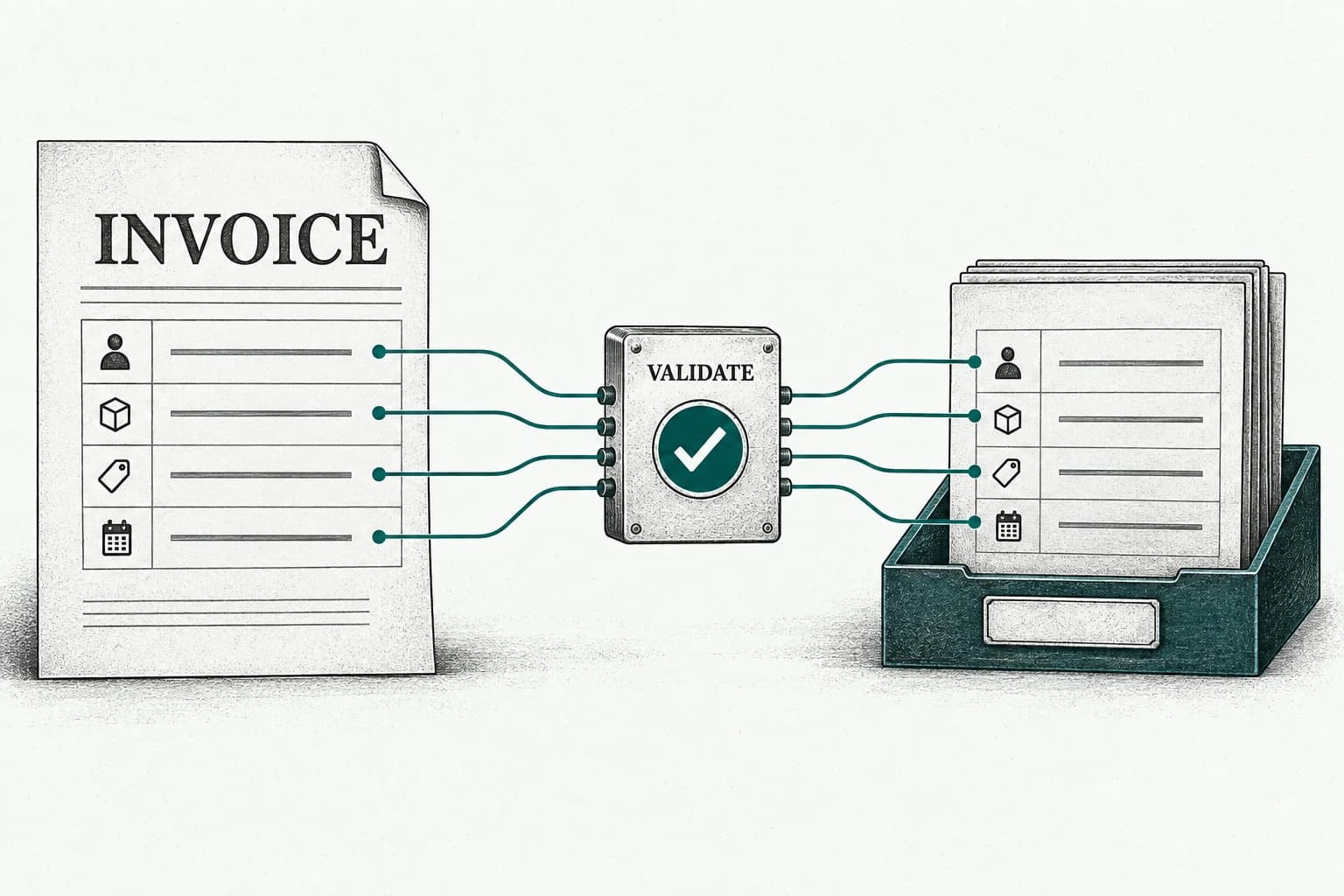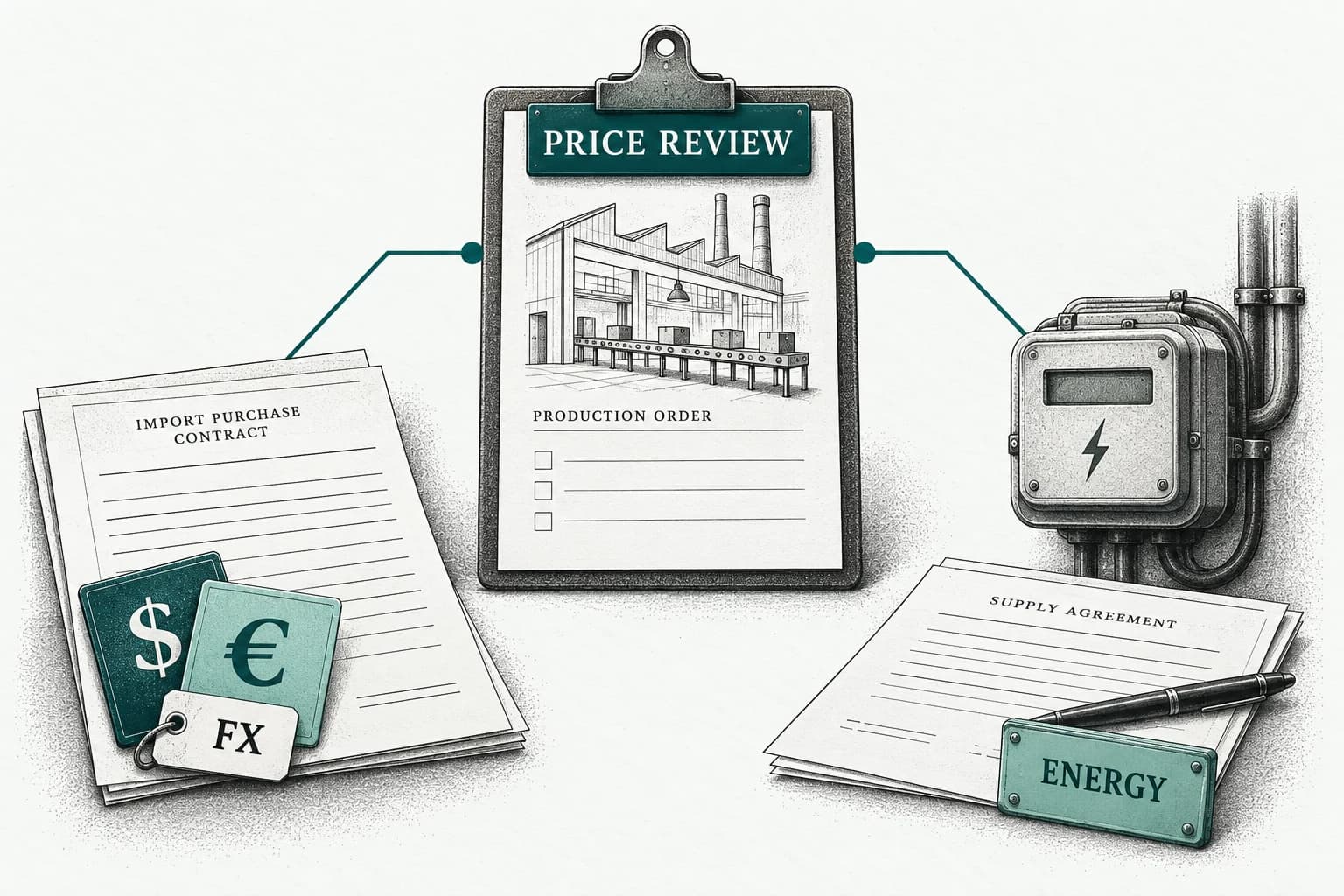
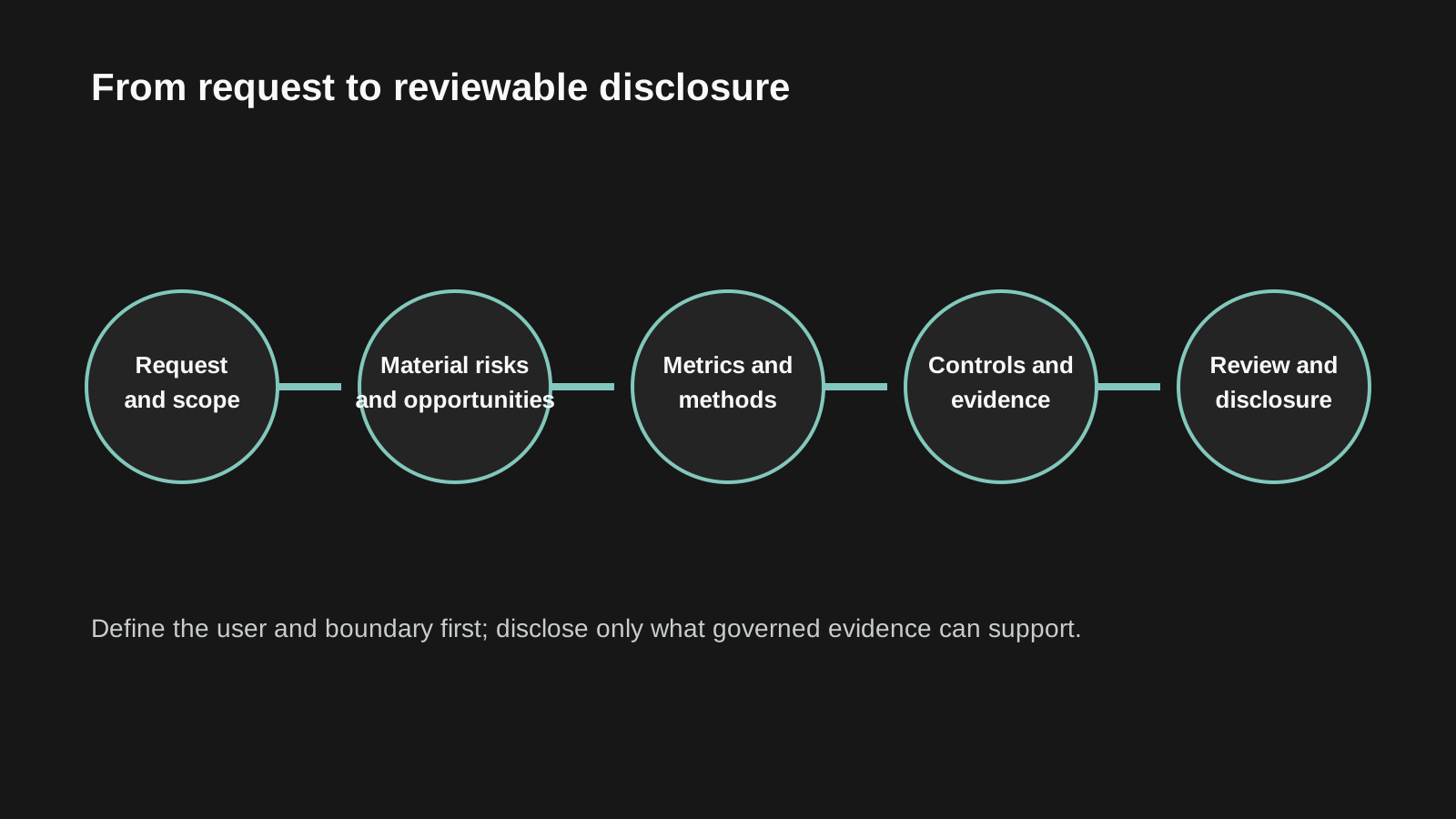
An SME should prepare for ISSB-aligned sustainability disclosures by first confirming who needs the information and which jurisdictional or contractual rules apply. Then assign governance, identify sustainability-related risks and opportunities that could affect enterprise value, map required data and methods, strengthen evidence and controls, and pilot a concise report that is consistent with financial information. IFRS S1 covers sustainability-related financial information generally and IFRS S2 focuses on climate. Adoption and reliefs differ by jurisdiction, so this guide supports readiness rather than determining a company’s legal reporting obligation.
Why an SME may receive ISSB-aligned requests
The IFRS Foundation tracks jurisdictions adopting or otherwise using ISSB Standards, but requirements are not uniform. Some regimes apply first to large or listed entities; others phase coverage, modify timing, or use local standards. SMEs may still encounter requests through parent companies, lenders, investors, insurers, public procurement, export customers, or larger clients measuring value-chain exposure. A request from a customer is a commercial data requirement, not automatically proof that the SME itself has a statutory ISSB filing duty.
Begin with a request register. Record the requesting party, purpose, framework, legal or contractual basis, entity and period, metrics, methodology, deadline, assurance expectation, confidentiality, and consequences of non-response. Consolidate overlapping requests. This prevents teams from building multiple inconsistent datasets and helps leaders decide which capabilities are reusable. Obtain local advice before representing compliance with a standard or law.
Understand the decision-useful focus
ISSB Standards focus on sustainability-related risks and opportunities that could reasonably be expected to affect an entity’s prospects and on information useful to primary users of general-purpose financial reports. That focus differs from reporting every environmental or social activity. For an SME, useful questions include whether energy exposure changes cost or continuity, water stress affects production, regulation changes asset value, customer requirements influence revenue, or workforce capability affects delivery.
The analysis should connect to strategy, cash flows, access to finance, and cost of capital over relevant horizons. Avoid generic lists copied from another industry. Interview finance, operations, procurement, sales, risk, and leadership; review budgets, contracts, insurance, incidents, investment plans, and customer requirements. Document why an issue is included or excluded and revisit the assessment when the business, location, supply chain, or rules change.
Assign governance and reporting boundaries
Name an accountable executive and a working owner, then define review by management or the board appropriate to the company. Governance should cover scope, methods, estimates, changes, controls, approval, and external communication. Sustainability information should not sit in a presentation disconnected from finance. Finance can help reconcile periods, entities, estimates, and narrative claims with the financial statements and management reporting.
Define the reporting entity and boundary. Map legal entities, sites, operations, joint arrangements, suppliers, customers, and data owners. Climate emissions can involve Scope 1 direct emissions, Scope 2 purchased energy, and relevant Scope 3 value-chain categories, each with different evidence and estimation challenges. Do not imply complete coverage when data is partial. State the boundary, methodology, assumptions, exclusions, and limitations clearly.
Build a controlled data inventory
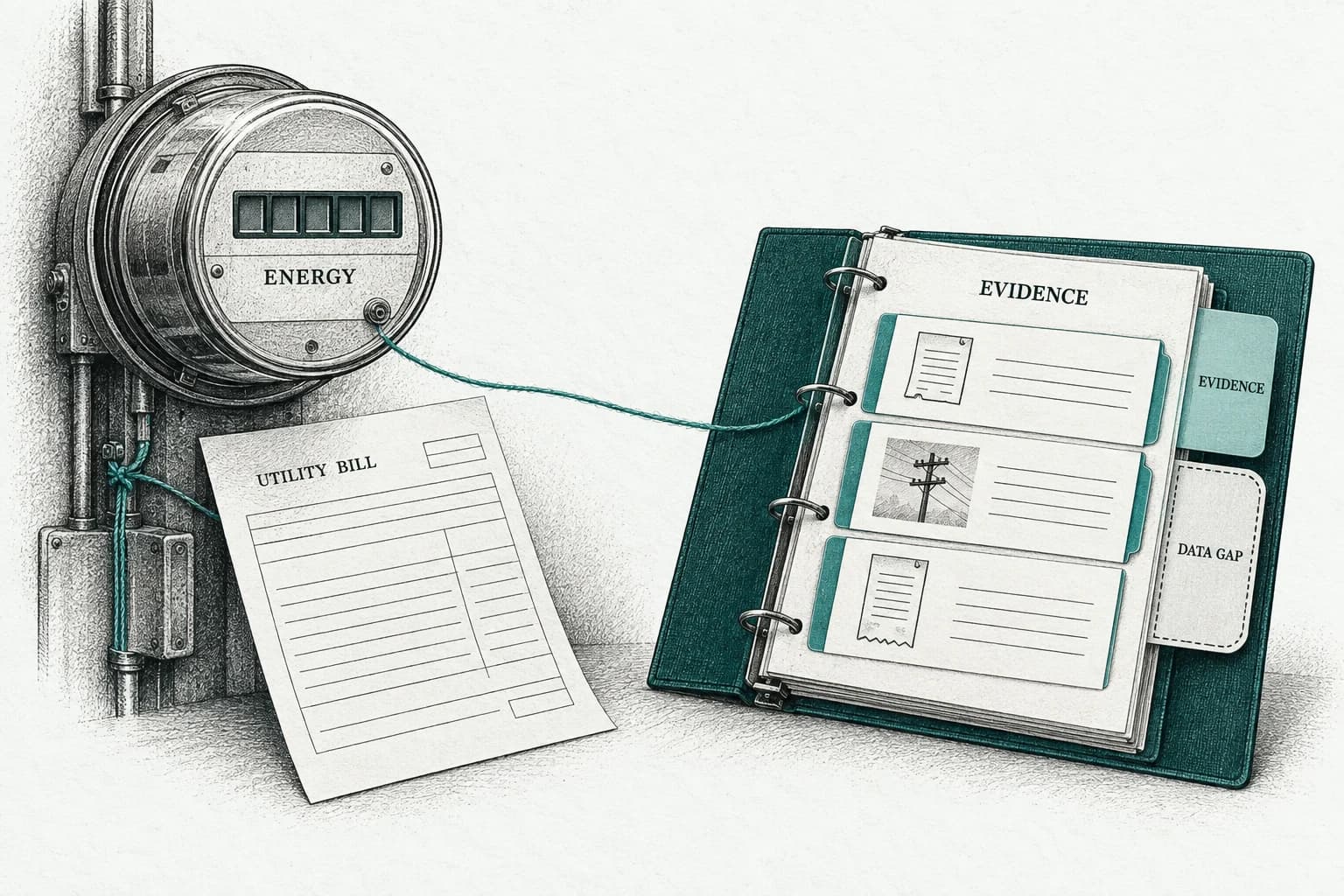
For each metric, record definition, unit, entity, site, source system, owner, frequency, calculation, conversion factor, estimate, control, evidence, and retention. Energy invoices, meter readings, fuel records, travel systems, procurement data, HR records, production volumes, and supplier submissions may all contribute. Prefer direct evidence where available and label estimates. Use current, authoritative conversion factors and preserve the factor version and source.
Create controls proportionate to the claim: completeness checks across sites, reconciliations to invoices or ledgers, unit validation, duplicate detection, reasonableness analysis, management review, and access control. Keep a change log for restatements and methodology updates. If a spreadsheet remains the practical starting tool, protect formulas and input cells, use version history, restrict access, and assign a backup owner. A controlled spreadsheet is better than an elaborate platform with uncertain source data.
Address climate risk, scenarios, and estimates honestly
Climate information can include physical risks such as heat, flood, drought, or storms and transition risks such as policy, technology, market, or energy changes. Map exposure by location, asset, supplier, and customer where relevant. Use scenario analysis proportionate to skills and resources: the purpose is to explore resilience under plausible conditions, not to claim a precise forecast. Connect assumptions to operational and financial planning.
Estimates are often unavoidable, particularly in value chains. Establish an estimation hierarchy, document methods, identify uncertainty, and improve over time. Do not convert supplier silence into a zero. Separate measured, calculated, estimated, and unavailable data. If a customer requests a number that cannot yet be supported, explain the limitation and remediation plan rather than offering false precision. Reliability builds trust more effectively than an ambitious but unauditable total.
Pilot a connected and reviewable disclosure
Structure a pilot around governance, strategy, risk management, and metrics and targets, while following the exact applicable framework. Cross-reference financial reporting where relevant and check consistency of dates, entities, currency, assumptions, capital plans, and risk descriptions. If a climate risk is described as material but the business plan assumes no operational or financial response, investigate the gap. If a target is stated, identify baseline, boundary, method, timeline, interim milestones, owner, and progress.
Run a disclosure committee or equivalent review involving finance, operations, legal or compliance support, and leadership. Verify every quantitative claim and avoid unsupported superlatives. Clarify whether information is prepared using ISSB Standards, aligned with selected concepts, or supplied only in a customer questionnaire. Those are different representations. Seek qualified review before an external compliance assertion or assurance engagement.
Use a phased roadmap rather than a reporting scramble
In the first phase, confirm requirements, governance, material topics, boundary, and priority data. In the second, gather a baseline, document methods, implement controls, and pilot management reporting. In the third, reconcile narrative and numbers, resolve gaps, obtain appropriate review, and prepare external responses. Schedule the work with the financial close rather than as a last-minute sustainability project.
Treat incoming requests as signals for process improvement. A reliable energy or supplier dataset can support cost control and resilience as well as disclosure. Review the roadmap quarterly, monitor jurisdictional developments through official sources, and retain evidence of decisions. Readiness does not mean collecting everything. It means knowing what is required, why it matters, how it was measured, where uncertainty remains, and who is accountable for the statement.
Plan capability by role. Operational owners need to understand source records and definitions; finance needs consolidation, reconciliation, and connection to financial effects; leadership needs material risks, choices, and limitations; internal or external reviewers need traceable evidence. Training should use the company’s actual boundary and metrics. A generic sustainability course cannot resolve an unclear meter, a missing supplier record, or an unsupported target. Assign remediation owners and due dates for each gap found in the pilot.
Protect sensitive information while improving transparency. Site energy, supplier exposure, workforce information, strategy, and scenario assumptions may be commercially or personally sensitive. Classify data, restrict access, aggregate appropriately, and review external requests before release. Confirm rights to use supplier data and the confidentiality of customer portals. Disclosure governance should make supported information available to intended users without turning every working paper into a widely shared file.
Budget for evidence and assurance readiness, not merely design. External review may reveal weak ownership, inconsistent periods, undocumented estimates, or numbers that do not reproduce. Conduct an internal dry run: select samples, trace them to source, recalculate metrics, challenge narrative, and inspect approvals. Fix the process that created an error rather than adjusting only the final report. Over successive cycles, shorten collection time, reduce estimates where useful, and preserve comparability when methods change.
Keep claims proportionate during the build. Terms such as net zero, climate neutral, sustainable, aligned, or compliant can carry expectations beyond an internal initiative. Define every public claim, identify the boundary and period, retain supporting evidence, and obtain appropriate review. If progress is partial, say so. Clear description of methods, limitations, and next steps is more decision-useful than an absolute label the SME cannot substantiate across its operations and value chain.
Finally, establish a controlled response to data requests. Staff should know who can answer, which approved dataset to use, how to handle a new metric, and when legal, finance, sustainability, or leadership review is required. Record what was submitted and preserve the version. This avoids inconsistent answers to different customers and gives the next reporting cycle a traceable starting point rather than another search through email attachments.
| Phase | Key output | Quality check |
|---|---|---|
| Scope | Request register, jurisdictions, entities, users | Obligation and purpose verified with qualified support |
| Governance | Accountable owner, review and approval route | Responsibilities and escalation are documented |
| Assessment | Material risks, opportunities, horizons, links to prospects | Reasoning is company-specific and evidence based |
| Data | Metric inventory, methods, estimates, controls, evidence | Numbers reconcile and limitations are visible |
| Disclosure | Connected narrative, metrics, targets, comparisons | Claims match scope, records, and financial information |
Frequently asked questions
Are all SMEs required to report under ISSB Standards?
No. Adoption, scope, dates, and reliefs depend on jurisdiction, entity status, and other requirements. SMEs may also receive contractual or supply-chain requests without being directly subject to a statutory ISSB mandate. Confirm the position locally.
Does ISSB reporting cover only carbon emissions?
No. IFRS S2 focuses on climate, while IFRS S1 addresses sustainability-related risks and opportunities more broadly when they could affect the entity’s prospects. Applicable disclosure depends on materiality and the adopted requirements.
Can an SME use estimates when direct data is unavailable?
Often estimates are necessary, but the method, source, boundary, assumptions, uncertainty, and controls should be documented. Distinguish estimates from measured data and avoid claiming more precision or coverage than the evidence supports.
Sources
- IFRS Sustainability Disclosure Standards around the world — IFRS Foundation
- Voluntarily applying ISSB Standards — IFRS Foundation
- The next-generation monetary and financial system — Bank for International Settlements