ISO 20022 is a global financial-messaging standard that carries payment information in consistent, structured fields. It does not make every transfer instant or remove fees, but it can help banks and businesses preserve beneficiary, invoice, purpose, and remittance data across a cross-border payment chain. For an SME, the immediate task is practical: clean customer and supplier master data, capture complete payment instructions, test bank and software exports, preserve identifiers end to end, and improve reconciliation rules. The exact fields and implementation dates depend on the bank, network, and jurisdiction.
What ISO 20022 changes—and what it does not
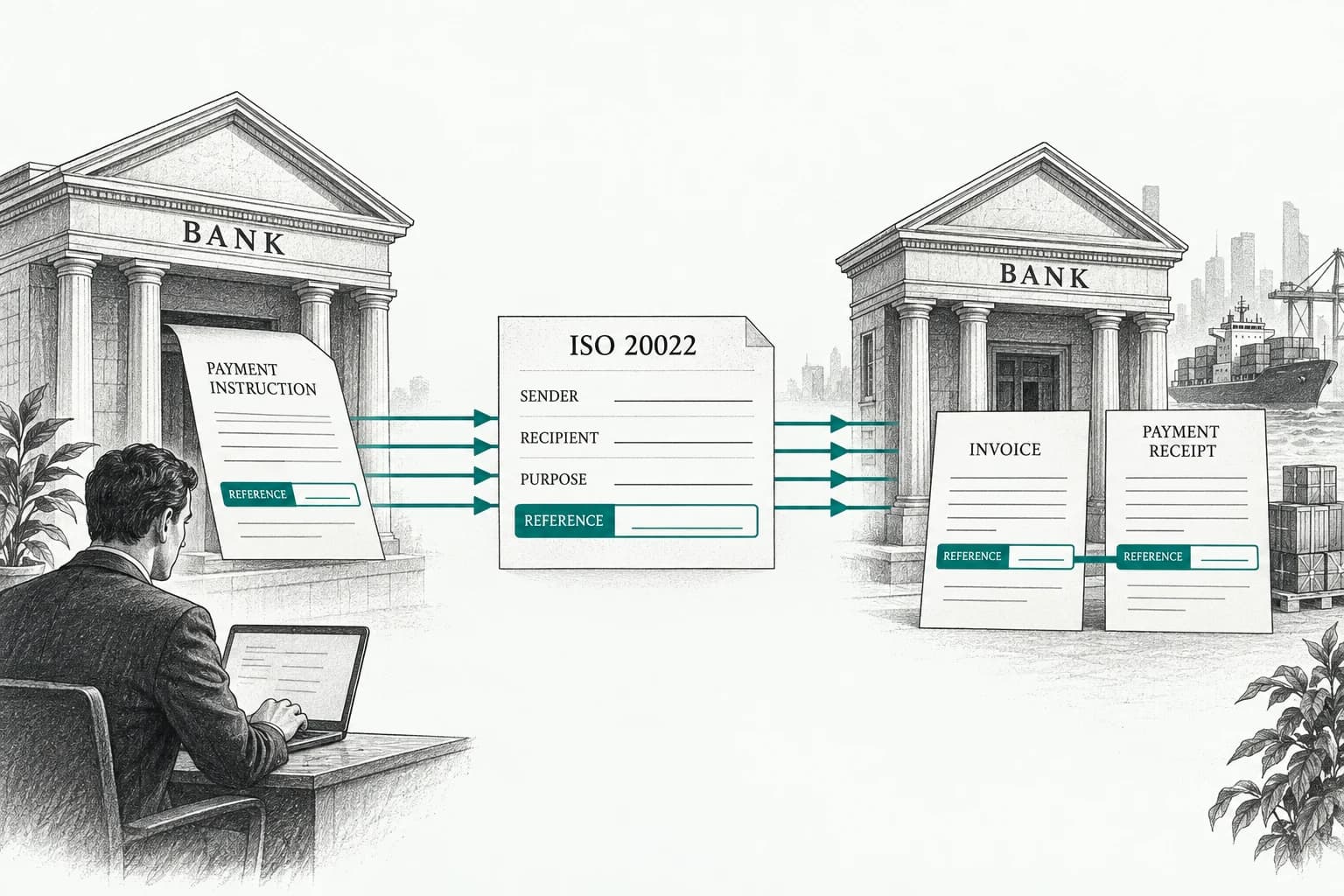
Traditional payment messages often compress information into short free-text fields. ISO 20022 uses a shared business model and structured elements for parties, accounts, agents, purpose, remittance, and other details. The BIS Committee on Payments and Market Infrastructures has published harmonized data requirements for cross-border use because different implementations can otherwise recreate fragmentation. Rich structure supports screening, routing, exception handling, analytics, and reconciliation when participants populate and preserve the fields correctly.
The standard is a language, not a single rail or guarantee. A payment may still cross multiple intermediaries, currencies, time zones, and compliance processes. Settlement speed, transparency, cost, and finality depend on the service and institutions involved. An SME should therefore avoid the claim that an ISO 20022 label alone produces an instant, cheap, or error-free transfer. Its real opportunity is higher-quality data that can reduce manual repair and make payment status easier to understand.
Why richer payment data matters to an SME
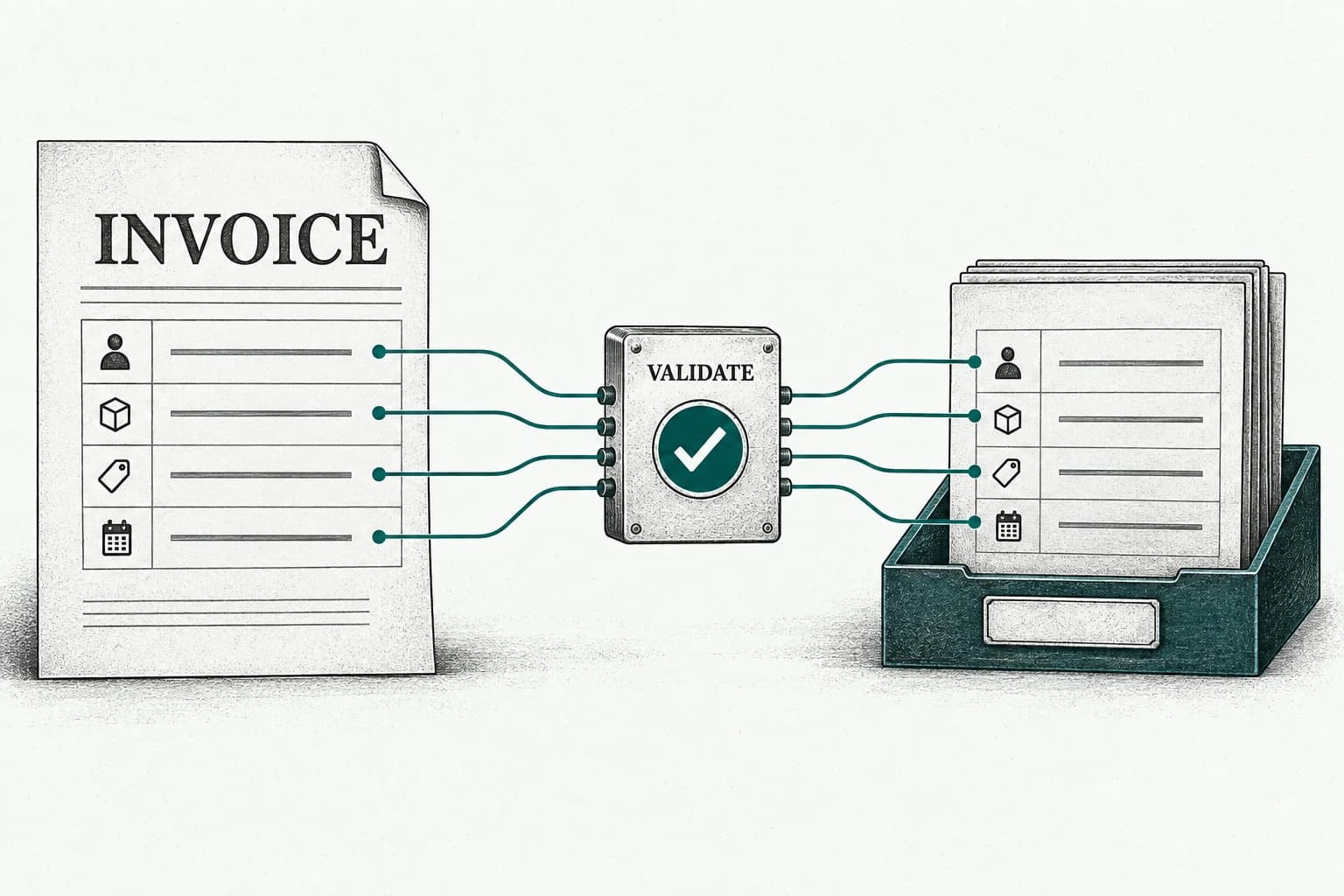
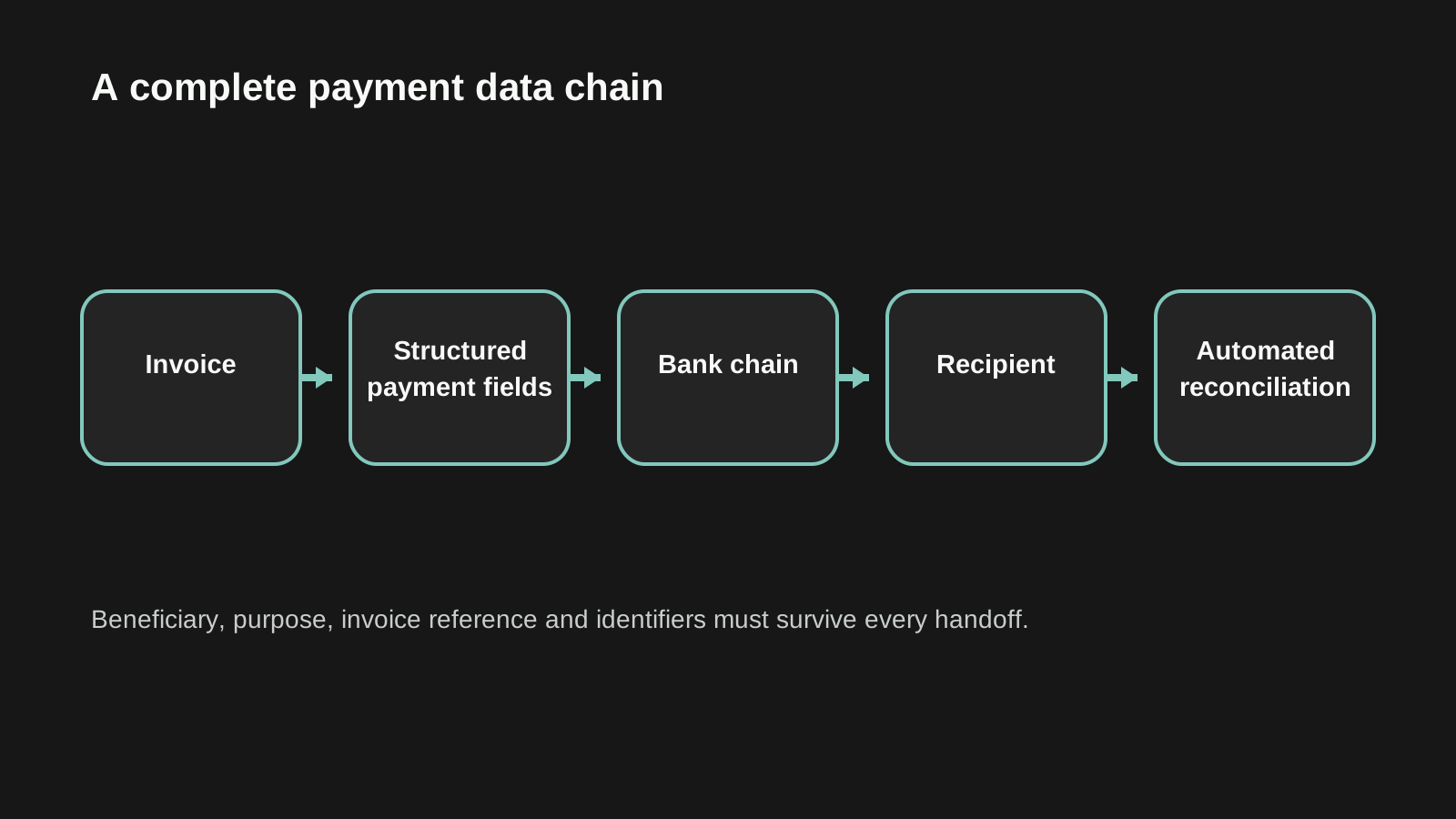
Complete information can connect a payment to the underlying business transaction. A customer can include a structured invoice reference; the recipient can match it automatically; finance can investigate only exceptions. Purpose codes and party information may reduce questions from providers. Consistent identifiers can help a shared-services team manage multiple entities and currencies. The benefit is strongest when the invoice, accounting record, payment file, bank message, and cash application all use compatible data rather than translating it into a note midway.
Poor data becomes more visible too. Abbreviated legal names, outdated addresses, inconsistent account identifiers, duplicate suppliers, and vague remittance text can cause repairs or screening delays. A richer message does not correct an unreliable vendor master. It may simply carry the error farther. The migration is therefore partly a data-governance project: define authoritative fields, assign owners, validate changes, and reconcile the business system with bank requirements.
Map the payment information chain
Choose several real payment journeys: paying an overseas supplier, receiving export revenue, settling an intercompany charge, refunding a customer, or paying a contractor. Document the invoice and contract fields, accounting record, approval, payment file, bank portal, intermediary messages, recipient statement, and final reconciliation. Identify where structured data is created, shortened, transformed, or lost. Ask the bank which channels and message variants apply rather than assuming the same behavior across portal entry, bulk file, API, and local clearing.
Include returns and investigations. Determine which identifier appears when a payment is rejected, charged, partially received, or returned. Confirm how fees are represented and whether the recipient receives the full remittance reference. A successful test should prove more than debit from the sender’s account. It should show that the intended recipient received the right value, the information remained usable, and both finance teams could reconcile the event without an informal email.
Clean master data and strengthen change controls
Start with legal entity names, registered addresses, tax or organization identifiers where required, account names, account numbers or IBANs, bank identifiers, currencies, and country information. Remove obsolete records and establish one source of truth. Do not invent missing data merely to fill a field. Confirm requirements with the provider and counterparty. Where local scripts or transliteration are involved, test how systems preserve characters and which authoritative form the bank expects.
Vendor-master fraud controls remain essential. A structured format can carry fraudulent details perfectly. Separate requests from approvals, verify bank changes through an independently known channel, restrict edit access, log changes, and apply dual control for sensitive suppliers. Compare the approved master record with the payment file immediately before release. Rich payment data should reinforce these controls rather than tempt the company to trust an automated file without independent validation.
Test ERP, treasury, and banking interfaces
Inventory every application and file format involved. Ask software providers whether they generate or consume the bank’s required ISO 20022 message, which version they support, how optional fields map, and whether an upgrade changes behavior. Build a controlled test set covering currencies, countries, invoice references, special characters, multiple invoices, charges, returns, and rejected items. Compare the structured source with the bank’s accepted message and with data visible to the recipient.
Do not treat a bank-portal test as proof that an automated integration works. APIs and files can apply different validation and cut-off rules. Check acknowledgment messages, error codes, retry behavior, duplicate prevention, and authorization. Preserve sample evidence and expected results so upgrades can be regression-tested. If a middleware provider transforms messages, document the mapping and assign responsibility for changes.
Improve reconciliation without removing judgment
Use stable end-to-end references, structured remittance information, amount, currency, value date, and counterparty data to create matching rules. Begin in suggestion mode and measure false matches, missed matches, partial payments, deductions, credit notes, and aggregated settlements. A reference match should not override contradictory amount or counterparty information. Keep thresholds and exception reasons visible so finance understands why an item matched.
Reconciliation design should cover bank fees, foreign-exchange differences, withholding, chargebacks, and returned payments. Route exceptions to owners with evidence and aging. The goal is not one hundred percent straight-through processing at any cost; it is reliable automation of unambiguous cases and faster investigation of the rest. Retain review and sign-off over accounts even when matching becomes highly automated.
Ask providers precise readiness questions
Request the applicable migration timeline, channel, message version, mandatory and conditional fields, testing process, cut-off, fees, reporting, and support model. Ask whether data survives every correspondent or clearing step, how the bank handles incomplete messages, and which identifiers appear in status reports. For incoming payments, confirm what information is delivered to statements, APIs, or reporting files. Document answers by country and entity because one banking group may implement differently across markets.
Finally, set ownership across finance, treasury, IT, procurement, sales operations, and data protection. Review changes through normal release management, train payment preparers and approvers, and monitor rejection and repair rates after migration. ISO 20022 readiness is complete only when the business process—not merely a file—continues to operate, reconcile, and evidence decisions safely.
Measure a small baseline before the change: manual repairs, rejected payments, missing remittance details, reconciliation time, investigations, and fees. Repeat the measures after implementation and separate migration noise from durable improvement. Better structure may initially expose more errors because validation is stronger. Treat those failures as data-quality work rather than pressure to bypass required fields. Publish a short internal data dictionary so staff understand what each critical field means and where its authoritative value originates.
Coordinate with key customers and suppliers. Share reference and invoice conventions, confirm legal names and account information through controlled channels, and test the information they can actually see. An SME cannot create end-to-end benefit alone if the counterparty discards references or sends unstructured instructions. For multinational counterparties, identify whether their regional treasury or shared-service center owns the data standard. Keep evidence of agreed conventions and revisit it when either side changes bank or software.
Maintain fallback procedures during transition. Know how to create an approved manual payment, validate it, prevent duplicates, preserve structured information, and reconcile it later if a file or API fails. Define who can authorize fallback and how long it may remain active. Review fallback events for root cause. A migration is safer when continuity exists without quietly reopening the control weaknesses the new integration was meant to solve.
Include the change in close and audit procedures. Finance should know which bank report is authoritative, how message identifiers map to statements, how fees and returns are posted, and which exceptions remain open at period end. Retain configuration approvals and test evidence alongside operating reconciliations. When a bank, ERP, or message version changes, repeat the critical cases rather than relying on a prior sign-off. This turns ISO 20022 from a technical migration into a maintained finance capability with visible accountability across every active bank and entity.
| Workstream | Evidence to produce | Owner question |
|---|---|---|
| Bank requirements | Channel, version, fields, dates, and test plan | Which rule applies to each entity and payment type? |
| Master data | Validated party, account, bank, and address records | Who approves and verifies sensitive changes? |
| Systems | Documented field mapping and regression cases | Where is information transformed or lost? |
| Operations | Updated approvals, returns, and investigation process | Can staff resolve an exception without informal workarounds? |
| Reconciliation | Measured match rules and exception categories | Does automation preserve account ownership and sign-off? |
Frequently asked questions
Does ISO 20022 replace SWIFT?
No. SWIFT and other networks can carry ISO 20022 messages. The standard defines structured financial information; it is not itself a bank, settlement asset, or universal payment network.
Will every SME need to change its accounting software?
Not necessarily. Some banks or providers translate portal entries or existing files, while others require new formats or fields. Ask each bank and software provider what changes apply to the channels your business actually uses, then test end to end.
Does ISO 20022 stop payment fraud?
No. Better structure can support screening and anomaly detection, but fraudulent beneficiary data can still be entered. Independent change verification, segregation of duties, secure access, payment approval, and monitoring remain necessary.
Sources
- Harmonised ISO 20022 data requirements for enhancing cross-border payments — Bank for International Settlements Committee on Payments and Market Infrastructures
- The next-generation monetary and financial system — Bank for International Settlements
- Cyber-enabled fraud: digitalisation and illicit-finance risks — Financial Action Task Force