Every finance team needs layered payment controls that assume an attacker may impersonate a leader, supplier, customer, or colleague and may compromise a real account. The core controls are independent verification of new or changed beneficiary details, segregation between setup and release, phishing-resistant access where available, dual approval based on risk, payment limits, protected master data, anomaly monitoring, daily reconciliation, and a rehearsed response with bank contacts. No single email, message, phone call, or AI-generated voice should be sufficient to redirect money.
Understand the fraud chain, not only the message
Cyber-enabled payment fraud often begins before finance sees a request. Criminals may harvest credentials, monitor an email thread, register a lookalike domain, compromise a supplier, alter an invoice, impersonate an executive, or manipulate a legitimate portal. Social pressure then turns access into payment through secrecy, urgency, authority, fear, or a plausible commercial change. FATF’s 2026 work reports that 156 jurisdictions—about 90% of those assessed—identify fraud as a major money-laundering risk, illustrating the scale and cross-border nature of the problem.
The control objective is to break several links. Secure access reduces compromise; master-data governance prevents an email from becoming an approved beneficiary; independent verification detects impersonation; approval and limits constrain release; monitoring spots unusual behavior; reconciliation shortens detection; response improves recovery. A company that trains staff but leaves one person able to change and pay a supplier has addressed awareness without correcting the process weakness.
Verify beneficiary changes independently
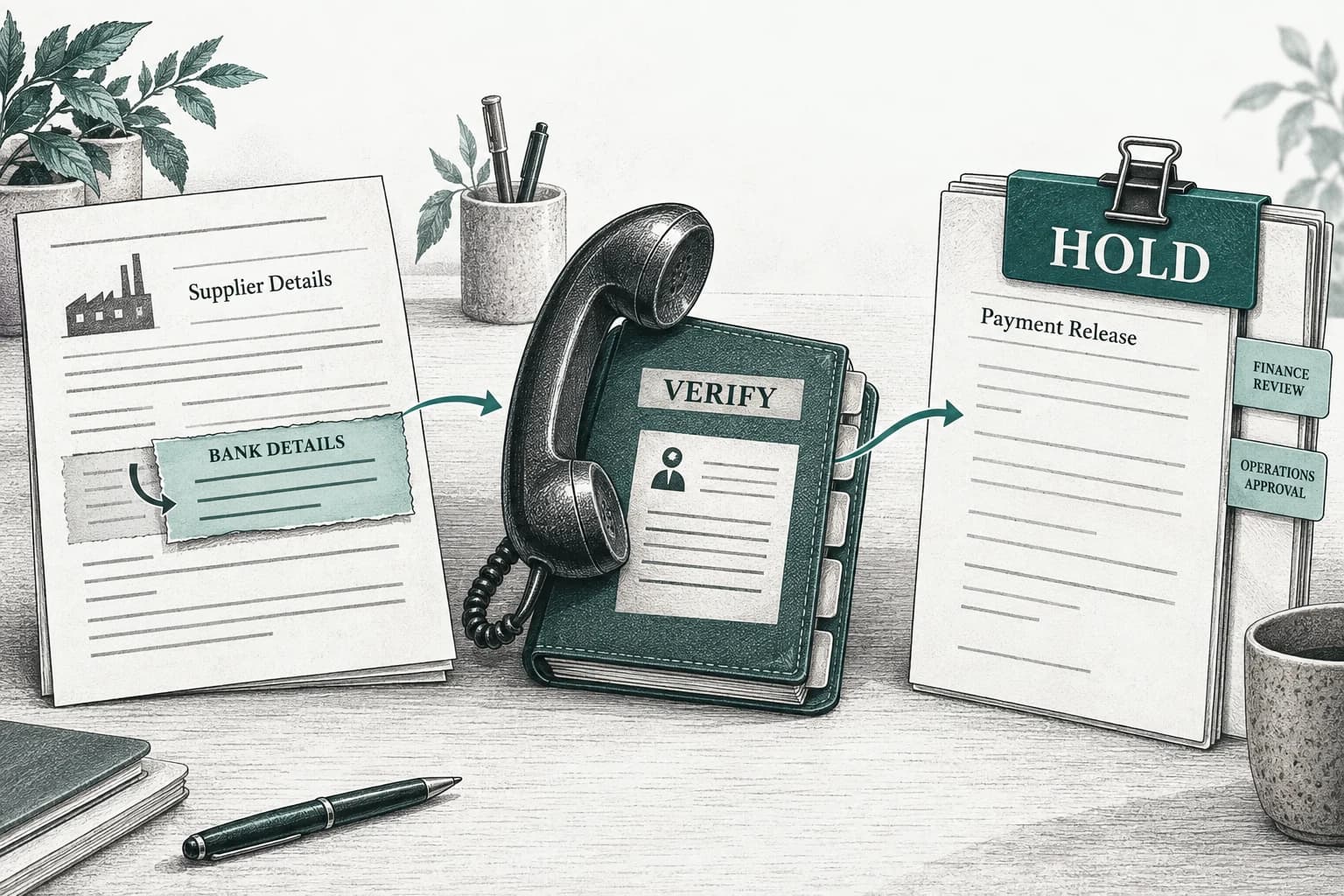
Treat every new bank account, wallet address, payment instruction, or change as high risk. The requester should not control the verification channel. Call a known contact using a number already held in an approved system or independently obtained from a trusted source—not the number in the change request. Use a second method for material changes and record who verified what, when, and with whom. Consider a cooling-off period or test payment where proportionate.
Do not rely on visual familiarity. Attackers can copy signatures, domains, invoices, and conversational style; generative AI can improve language and imitate voices. Verification should confirm legal name, account details, reason for change, and authority. If the counterparty resists a documented process, escalate rather than making an exception. Communicate the policy to suppliers before an incident so legitimate partners expect the extra step.
Separate master data, preparation, approval, and release
Design roles so one compromised account cannot complete the chain. Restrict who can create or modify counterparties, require review of sensitive changes, and prevent the same user from preparing and releasing a material payment. Bank permissions should reflect job responsibilities and value limits. Review access regularly and immediately after role changes or departures. Avoid shared credentials and uncontrolled administrator accounts.
Dual approval should be meaningful. Two clicks by people reading the same manipulated email are not independent control. Give approvers the invoice, purchase or contract evidence, beneficiary record, recent changes, amount, currency, payment purpose, and anomaly flags. Require them to inspect the bank’s final confirmation screen. For executive or urgent exceptions, add control rather than removing it: a known-channel call, designated alternate, and post-event review.
Secure the human and technical entry points
Use phishing-resistant authentication such as properly implemented passkeys or hardware-backed methods where providers support them, especially for email, identity administration, finance systems, and banking. Apply conditional access, device protection, patching, domain protections, email authentication, and alerts for suspicious sign-in or forwarding rules. Protect recovery channels because attackers may bypass strong login by resetting access. Separate everyday and privileged accounts.
Train with specific finance scenarios: bank-detail changes, confidential acquisitions, tax or payroll urgency, invoice-thread hijacking, QR codes, fake shared documents, remote-support requests, and calls that mimic a leader. Staff need a simple reporting route and permission to pause. Measure reporting and process compliance, not just quiz scores. When someone reports a suspicious request, investigate the related mailbox, rules, sessions, master records, and payments—not only the visible message.
Use payment analytics without outsourcing judgment
Flag first-time beneficiaries, recent account changes, round amounts, unusual currencies, out-of-hours creation, split payments, deviations from supplier history, high-risk locations, duplicate invoices, and approvals from new devices. Tune rules to the business and investigate alerts promptly. Machine learning can help prioritize patterns, but it can also miss a carefully designed first attempt or produce fatigue through excessive alerts.
Preserve the distinction between anomaly and authorization. A normal-looking payment may be fraudulent, and an unusual payment may be valid. The reviewer should see the evidence and follow independent verification. Track alert outcomes, overrides, and recurring false positives. Do not allow a risk score to release funds autonomously. The largest losses often begin with a request crafted to resemble ordinary work.
Reconcile quickly and prepare the first hour
Reconcile bank activity daily or more frequently for high-risk accounts. Alerts for debits, new beneficiaries, limit changes, and administrator actions can shorten detection. Maintain current bank fraud contacts, account and transaction identifiers, insurer details, legal and incident-response escalation, and authority to request a recall or freeze. Staff should know that speed matters and that preserving evidence must not delay contacting the bank.
The first response should stop further payments, contact the bank through trusted channels, secure affected accounts and sessions, preserve emails and logs, identify related beneficiaries and transactions, notify responsible leaders, and follow legal, regulatory, insurance, and contractual requirements. Do not continue communicating with the suspected attacker from a compromised channel. Record time, action, owner, and response. Recovery is uncertain; prevention and rapid detection remain the strongest protections.
Govern exceptions and test the complete process
Maintain an exception register showing request, reason, approver, compensating control, value, and review. Repeated urgency is a process problem, not justification for a permanent bypass. Test controls with walkthroughs and authorized simulations: attempt a supplier change, review the audit trail, inspect bank entitlements, and rehearse an executive impersonation. Include outsourced bookkeepers, payment processors, payroll providers, and remote teams because the chain often crosses organizational boundaries.
Report meaningful indicators to leadership: sensitive master changes, verification completion, segregations breached, dormant access, high-risk exceptions, blocked attempts, reconciliation delays, and response-test findings. Avoid promising a zero-fraud environment. The objective is a resilient process that makes deception harder, limits what one compromise can do, finds anomalies sooner, and responds without confusion.
Extend controls to the surrounding cash process. Fraudsters may manipulate refunds, payroll, expense reimbursements, direct-debit mandates, payment links, cards, or customer bank details, not only supplier wires. Apply ownership, verification, limits, monitoring, and reconciliation proportionate to each channel. Map which systems can create value movement and which identities administer them. A strong accounts-payable process can still be undermined through an overlooked payment processor or an administrator with broad access.
Manage third parties explicitly. Confirm how an outsourced finance provider authenticates staff, verifies changes, separates duties, releases payments, retains evidence, and reports incidents. Contractual responsibility does not remove the SME’s need to review access and activity. Ask banks and providers which alerts and entitlements are available, then configure them rather than assuming defaults are protective. Remove unused beneficiaries, tokens, devices, and integrations on a defined schedule.
After any attempt, including a blocked one, conduct a learning review. Identify the entry point, information the attacker possessed, controls reached, decisions made, and changes needed. Share useful patterns without blaming the reporter. Update verification scripts and training when attackers adapt. A near miss is valuable evidence that the threat model has changed; treating it as harmless wastes an opportunity to strengthen the process before money is lost.
Keep a concise control standard that staff can use under pressure. State prohibited actions, verification channels, value thresholds, approval roles, emergency contacts, exception authority, and required evidence. Make it available outside a potentially compromised mailbox. Translate or localize instructions for distributed teams without changing the control intent. Test that temporary staff and senior executives follow the same route. Attackers often seek the person who believes normal rules do not apply to an urgent or confidential request.
Where regulation or banking practice imposes additional duties, incorporate them explicitly and verify current requirements with qualified advisers and providers. Record retention, privacy, employee monitoring, sanctions, and reporting rules vary. A global policy should set the minimum control, while local procedures add legitimate requirements. It should never lower verification because one office historically worked through informal messages.
Review insurance coverage and notification conditions before an incident. Policies may distinguish social engineering, computer fraud, funds transfer, or vendor compromise, and time limits can be short. Insurance is not a substitute for control, but understanding evidence and contact requirements prevents avoidable delay during response.
| Control moment | Required safeguard | Evidence |
|---|---|---|
| New or changed beneficiary | Independent known-channel verification and approval | Verified details, contact, time, and approver |
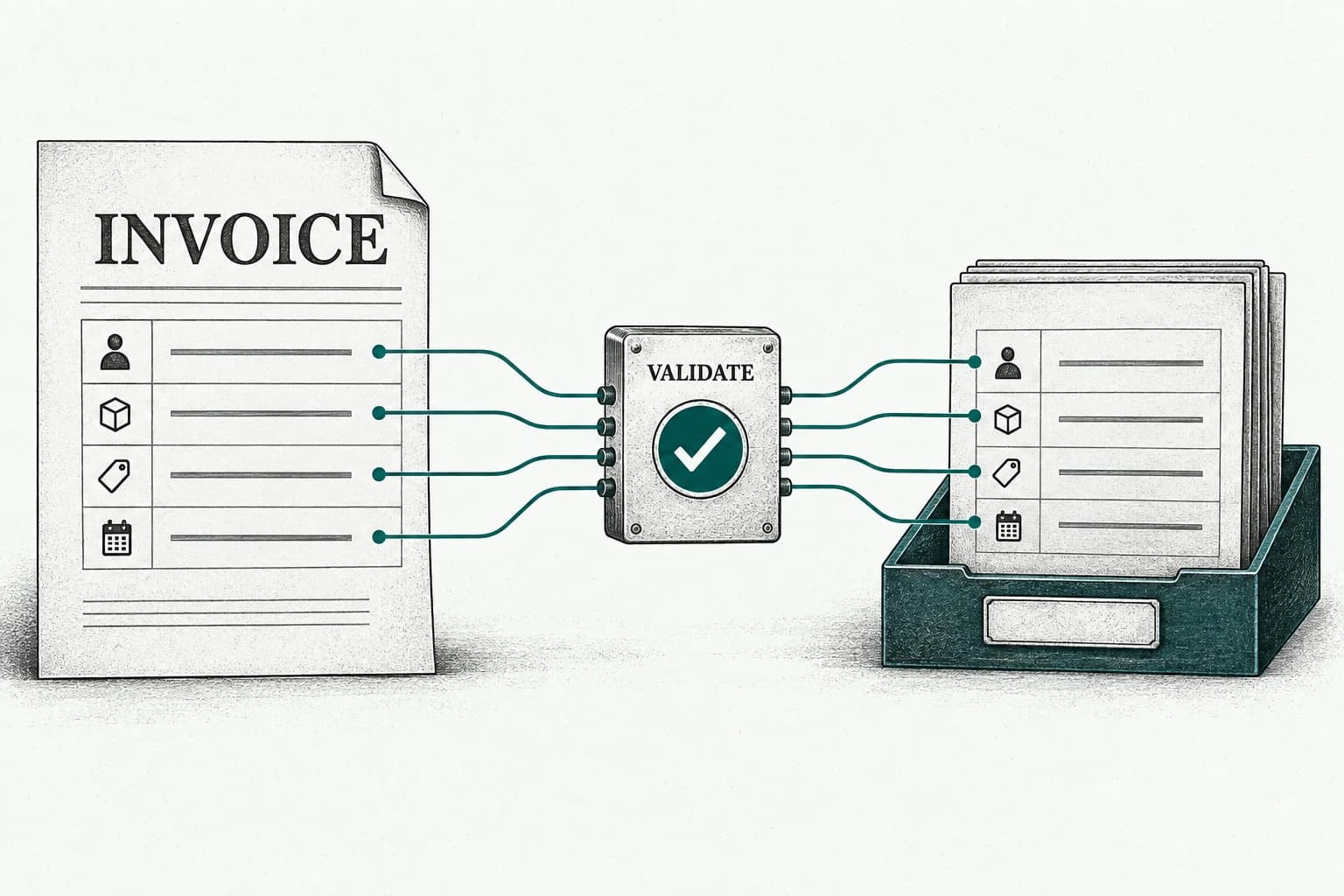
| Payment preparation | Authorized source documents and protected master data | Invoice, purchase evidence, change history |
| Release | Risk-based dual approval, final-detail review, limits | Bank approval record and transaction identifier |
| After payment | Alerts and timely bank reconciliation | Reviewed activity and resolved exceptions |
| Suspected fraud | Bank contact, access containment, evidence, escalation | Timestamped incident log and decisions |
Frequently asked questions
Is a phone call enough to verify changed bank details?
A call can be strong only when made to a previously known or independently sourced contact, not a number supplied in the request. For material changes, combine methods and retain a record. Voice alone is less reliable as impersonation technology improves.
Does dual approval prevent business email compromise?
It reduces risk only if approvers independently inspect trusted evidence and beneficiary details. Two people following the same fraudulent instruction without verification can still release a fraudulent payment.
What should finance do immediately after a fraudulent transfer?
Contact the bank’s fraud channel immediately to request recall or freeze, stop related payments, secure compromised accounts, preserve evidence, escalate internally, and follow applicable legal, regulatory, insurance, and notification requirements. Use trusted channels.
Sources
- Cyber-enabled fraud: digitalisation and illicit-finance risks — Financial Action Task Force
- Updated Advisory on Email Compromise Fraud Schemes — Financial Crimes Enforcement Network
- The next-generation monetary and financial system — Bank for International Settlements