A lightweight SME AI governance framework needs eight things: an inventory of use cases, an accountable business owner, a clear purpose and affected people, a risk tier, approved data and vendors, evidence-based evaluation, explicit human decision boundaries, and ongoing monitoring with a stop or retirement path. Use NIST AI RMF’s Govern, Map, Measure, and Manage functions as a practical cycle. Governance should be proportionate: a low-risk drafting assistant needs less control than a system influencing credit, employment, health, safety, finance, or customer rights.
Govern through visibility and ownership
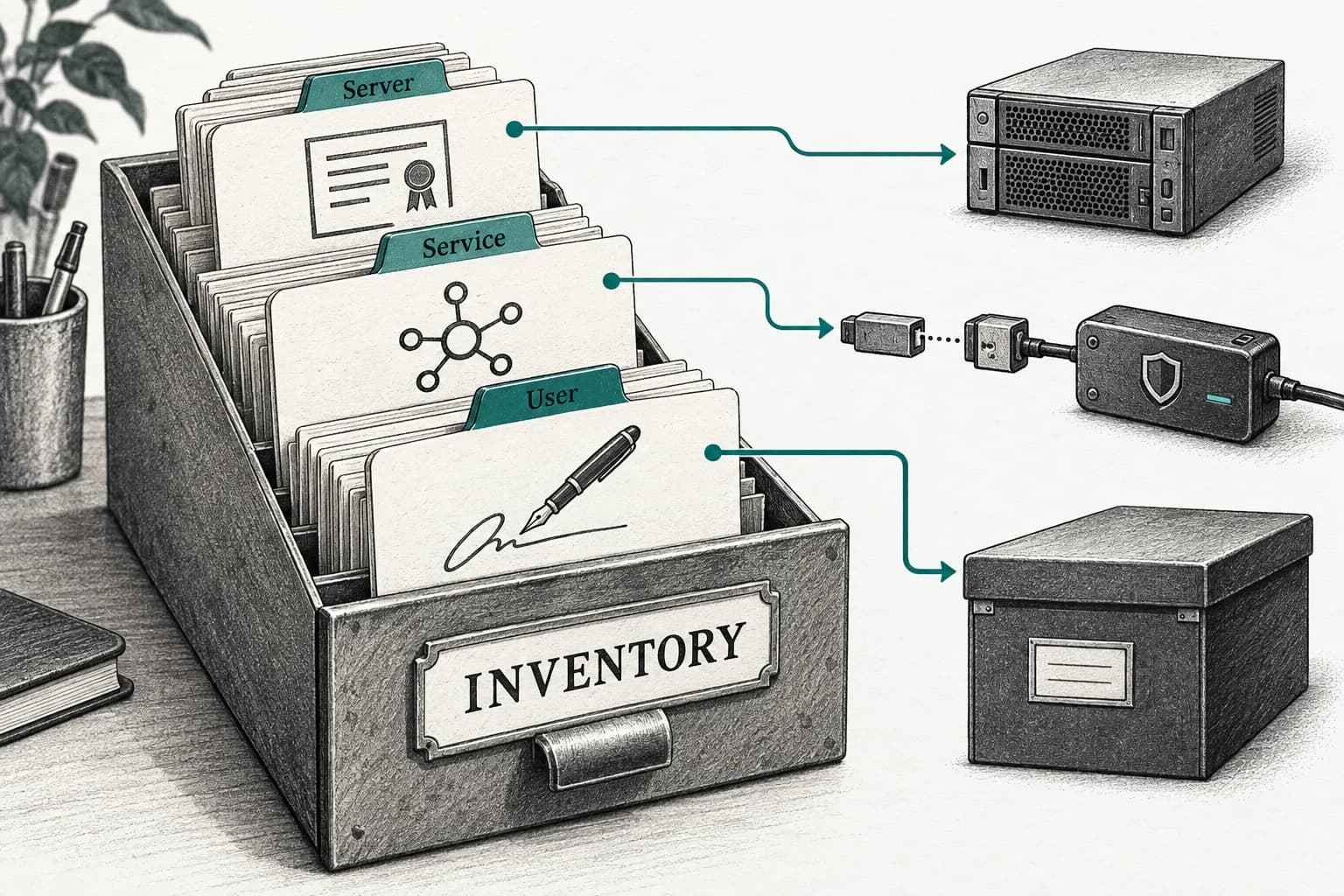
Create one register for pilots and production uses, including embedded AI features in existing software. Record name, purpose, owner, users, affected people, vendor and model, data, tools, decision, deployment status, countries, risk tier, approval, evaluation, incidents, cost, and review date. Unknown use cannot be governed. Give staff a safe route to disclose experiments rather than driving them into personal accounts.
The business owner is accountable for the outcome, not only the technology team or vendor. Security, privacy, legal, compliance, HR, finance, and domain specialists contribute according to risk. Define who may approve each tier and who can suspend use. Keep governance small enough to operate: a recurring cross-functional review can handle high-risk cases while low-risk standard patterns follow a documented checklist.
Map purpose, people, and context
Write the intended benefit and baseline. Identify who uses output, who is affected, which decision or action follows, and what happens when the system is wrong. Consider vulnerable users, accessibility, language, culture, and regional requirements. Map data provenance, retention, cross-border processing, intellectual property, and whether individuals reasonably expect this use. A generic productivity claim is not a sufficient purpose.
Identify misuse and foreseeable misuse. A summarizer may be used to rank employees; a support assistant may reveal another customer’s data; a coding tool may introduce insecure dependencies; an agent may act on malicious document instructions. State prohibited uses and technical or procedural barriers. Reassess context when users, tools, data, countries, or decisions change.
Apply proportionate risk tiers
Use a simple tiering method based on impact, autonomy, data sensitivity, scale, reversibility, external exposure, and legal significance. Low risk might include internal drafting with no sensitive data and mandatory review. Medium risk could involve customer-facing content or sensitive internal retrieval. High risk includes material decisions, consequential actions, regulated activity, vulnerable people, biometrics, safety, or broad tool access. Local law may impose categories or duties that override an internal tier.
Tie each tier to minimum controls. Higher risk requires stronger authority, specialist review, representative testing, independent challenge, transparency, logging, monitoring, incident readiness, and deployment restrictions. Risk tier is not a badge awarded once. Increase it when scale, autonomy, data, or consequence grows. If the organization cannot implement necessary controls, do not deploy the use.
Approve data, vendors, and architecture
Classify permitted input and output. Prohibit secrets, personal, financial, customer, health, legal, source-code, or other sensitive data in unapproved tools. Review lawful basis and notices where relevant. Minimize data, restrict access, mask or synthesize examples for testing, and define retention and deletion. Confirm whether prompts and outputs train shared models and which subprocessors or regions are involved.
Vendor review should cover security, privacy, model and feature changes, availability, incident notice, intellectual property, data export, deletion, subcontractors, audit evidence, accessibility, and exit. Architecture should keep identity, policy, secrets, authoritative data, approval, and logs under the organization’s control. Avoid granting an AI interface broader rights than the user or process actually needs.
Measure performance and harm
Build evaluations from representative permitted cases and define expected output and prohibited behavior. Measure quality, factual support, false positive and negative rates, bias relevant to the context, policy compliance, security, privacy, latency, cost, and human correction. Test edge cases, multilingual use, prompt injection, stale information, refusal, and fallback. For high-impact uses, obtain independent domain challenge.
Compare with the current process. Humans and existing systems also err, but that does not excuse an AI failure; it provides the baseline for an informed decision. Establish acceptance thresholds by consequence and document residual risk. Run shadow mode and a limited pilot. Do not rely on vendor benchmark scores that do not represent the company’s data, users, and workflow.
Manage deployment and human control
Publish user instructions describing purpose, allowed data, limitations, verification, escalation, and prohibited actions. Place human review where a decision can still change, with access to sources and authority to disagree. Use deterministic validation for calculations, permissions, destinations, and business rules. Require explicit confirmation for external communication, purchases, payments, record changes, or other consequential actions.
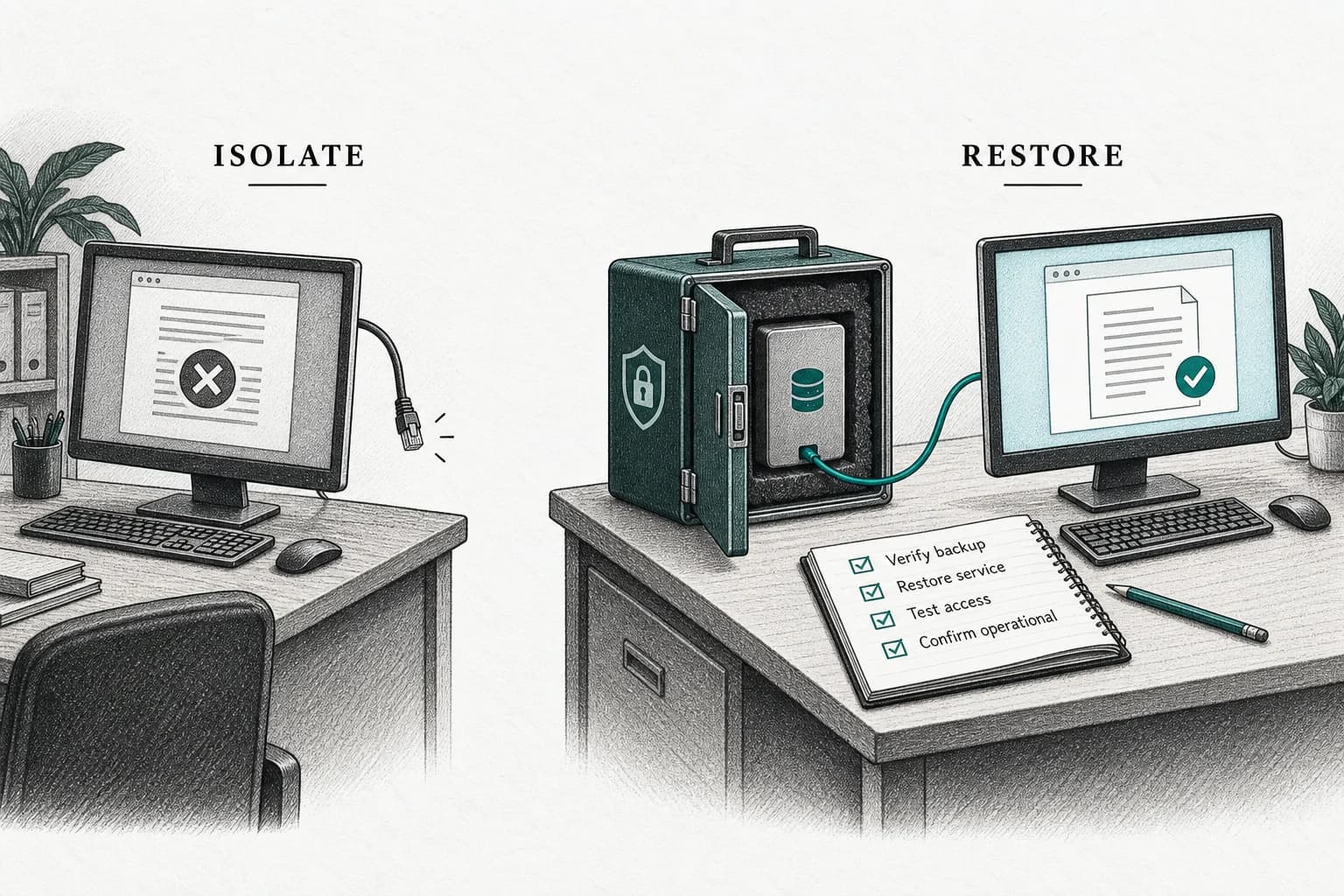
Monitor outcome, corrections, complaints, incidents, drift, access, provider changes, and cost. Give users a reporting channel and investigate near misses. Maintain manual continuity and rollback. Review on schedule and after material change. Retire uses that are unused, unsafe, unsupported, duplicative, or unable to demonstrate value. Revoke credentials and delete or retain data according to policy.
Make the framework part of normal management
Integrate AI review with procurement, security, privacy, change management, risk, incident response, and internal control rather than creating a parallel bureaucracy. Use standard templates and approved patterns for common low-risk work. Train leaders to ask about purpose, evidence, data, decisions, and accountability—not only model accuracy. Train staff to recognize uncertainty, automation bias, impersonation, and unsafe sharing.
Report a concise portfolio view: active uses by risk, owners, affected processes, measured benefit, open issues, incidents, upcoming reviews, and spend. NIST AI RMF is voluntary and adaptable; it helps organize work but does not determine every legal obligation. Monitor official requirements in relevant jurisdictions and obtain qualified advice for consequential uses. Good governance is a repeatable management habit, not a policy document stored after launch.
Create a short intake that employees can complete before procurement or experimentation: purpose, users, affected people, data, vendor, model behavior, tools, decision, countries, and expected benefit. The response should quickly route low-risk uses to an approved pattern and escalate uncertain cases. Publish service targets so governance is not perceived as an indefinite queue. Record declined uses and safer alternatives.
Maintain an approved-tools catalog with permitted data and use boundaries. Enterprise branding alone does not make every feature acceptable. Disable optional training, public sharing, broad connectors, autonomous actions, or long retention unless needed and approved. Review administrative settings after vendor updates. Staff should know that a feature appearing inside existing software can still create a new AI use requiring assessment.
Govern outputs beyond the moment of generation. A draft copied into a report, codebase, decision, or customer record can persist after the model session. Apply normal quality, records, accessibility, intellectual-property, and security controls to the resulting artifact. Mark uncertainty when needed and keep source references. Do not use an AI label as a substitute for accountable review or as a blanket reason to distrust verified work.
Exercise governance through scenarios. Test a confidential record pasted into an unapproved tool, a vendor changing retention, a biased recommendation, a prompt-injection attempt, an incorrect customer message, and a compromised agent token. Verify reporting, containment, evidence, communication, and decision authority. Update training and controls from findings. A framework becomes credible when people can use it during a difficult event.
Protect people from retaliation for reporting an AI concern or refusing an unsafe instruction. Give managers guidance for resolving disagreements and escalating pressure from a deadline or senior requester. Track complaints and appeals as governance data. If users repeatedly work around a control, investigate usability and incentives as well as individual behavior. A policy that cannot survive ordinary business pressure is not an effective control.
Review the framework after acquisitions, new markets, material incidents, legal changes, model or vendor changes, and significant expansion of autonomy. Update the inventory and affected notices, contracts, and training. Keep dated versions of policy and assessments so the company can explain what rules applied at a given time. Governance should learn without rewriting history.
Set practical documentation depth. Low-risk uses may need a one-page record and standard test; high-risk uses need detailed design, evidence, decision rationale, and independent review. Documentation should enable another competent person to understand, operate, challenge, and stop the system. Avoid both undocumented experimentation and paperwork copied without relation to the actual workflow.
Include AI governance in annual access and vendor reviews. Confirm that departed staff, dormant projects, expired pilots, and old integrations no longer retain access. Review model-provider accounts, API keys, workspaces, sharing links, and browser extensions. Small unresolved access paths can outlive the business purpose and evade the main application inventory.
| Tier | Example | Minimum governance |
|---|---|---|
| Low | Internal draft using approved non-sensitive data | Register, owner, instructions, human review, vendor approval |
| Medium | Customer response or sensitive retrieval | Risk assessment, data controls, evaluations, logging, monitoring |
| High | Material decision or consequential action | Senior approval, specialist and independent challenge, strict access, incident and rollback tests |
| Prohibited | Use that cannot meet law, rights, safety, or control needs | Do not deploy; document the decision and alternatives |
Frequently asked questions
Does a small company need an AI committee?
Not necessarily. It needs accountable decisions and cross-functional input proportionate to risk. A small recurring review group plus standard low-risk checklists can work if authority, records, escalation, and specialist review are clear.
Should every AI use have the same controls?
No. Apply stronger controls as impact, autonomy, sensitivity, scale, irreversibility, or legal significance increases. Maintain a minimum baseline for approved accounts, data, security, ownership, and human responsibility.
Is compliance with NIST AI RMF legally sufficient?
No. NIST AI RMF is a voluntary risk-management resource. Legal duties differ by jurisdiction, sector, use, and affected people. Use it to organize governance and obtain qualified advice on applicable requirements.
Sources
- Artificial Intelligence Risk Management Framework — National Institute of Standards and Technology
- Artificial Intelligence Risk Management Framework: Generative AI Profile — National Institute of Standards and Technology
- Donating the Model Context Protocol and establishing the Agentic AI Foundation — Anthropic