
Free Zone vs Mainland in the UAE: Why the Decision Matters More in 2026
Explore the key differences between Free Zone and Mainland companies in the UAE in 2026, including corporate tax, compliance, and strategic business considerations.
4/27/20262 min read
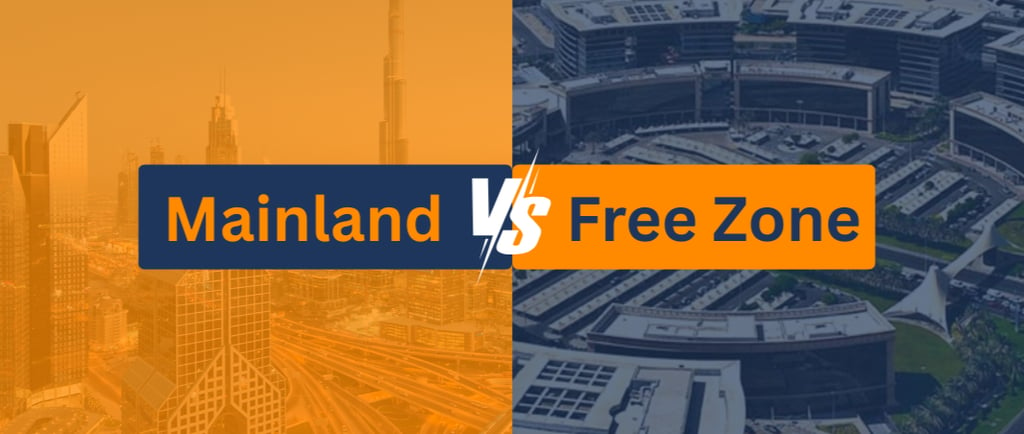
What Used to Be Simple Isn’t Anymore
For years, choosing between a Free Zone and a Mainland company in the UAE was relatively straightforward.
Free Zones offered tax benefits and ease of setup. Mainland companies offered flexibility in doing business across the UAE.
But in 2026, that decision has become more complex and more important.
With the introduction of corporate tax, evolving compliance requirements, and changing business models, the structure you choose can directly impact your costs, operations, and long-term growth.
What’s Changed?
The biggest shift is corporate tax (9%).
Previously, many businesses chose Free Zones mainly for tax advantages. Now, that advantage depends on meeting specific conditions.
At the same time, regulatory oversight has increased, and businesses are expected to maintain clearer financial and operational structures.
This means your company setup is no longer just about convenience, it’s about strategy.
Free Zone: Still Attractive, But With Conditions
Free Zones continue to offer strong benefits, especially for:
international businesses
service-based companies
export-focused operations
However, to benefit from 0% corporate tax, businesses must qualify as a “Qualifying Free Zone Person”.
This generally means:
earning qualifying income
maintaining adequate substance in the UAE
complying with reporting requirements
If these conditions aren’t met, the standard 9% corporate tax may apply.
Mainland: More Flexibility, More Exposure
Mainland companies operate with fewer restrictions when it comes to doing business within the UAE.
They can:
trade freely across the UAE market
work directly with government entities
scale locally without structural limitations
However, mainland businesses are fully subject to corporate tax and ongoing compliance requirements. This makes financial planning and tax management more important than ever.
The Real Question: How Do You Actually Operate?
The right structure depends less on “benefits” and more on how your business functions.
For example:
If your revenue is primarily international → Free Zone may still be efficient.
If you’re focused on the UAE market → Mainland may be more practical.
If you operate across both → the structure needs to be carefully planned.
This is where many businesses go wrong, choosing based on perception rather than actual operations.
Compliance Is Now Part of the Decision
In 2026, compliance is no longer separate from structure.
Your choice affects:
tax exposure
reporting obligations
audit requirements
operational flexibility
A structure that looks cost-effective initially can become expensive if it creates compliance complications later.
The Cost of Getting It Wrong
Choosing the wrong structure can lead to:
unexpected tax liabilities
restricted business activities
restructuring costs later
operational inefficiencies
Many businesses are now reconsidering setups they made just a few years ago.
A Smarter Approach
Instead of asking: “Which option is cheaper?”
Businesses should ask:
Where is our revenue coming from?
Who are our customers?
How do we plan to grow?
What are our compliance capabilities?
This leads to a more sustainable decision.
The Bigger Picture: UAE Is Maturing as a Market
These changes reflect a broader shift. The UAE is moving toward a more structured, transparent, and globally aligned business environment.
For businesses, this means:
fewer shortcuts
more accountability
better long-term stability
Structure Is Strategy Now
In today’s UAE, choosing between Free Zone and Mainland is not just a setup decision. It’s a financial and operational strategy. The right choice can:
optimize tax
improve flexibility
support growth
The wrong one can create friction at every stage.
Because in 2026, how you structure your business is no longer just about starting up. It’s about scaling smartly.