
Advisory Over Compliance: Why Businesses Need a Finance Partner, Not Just an Accountant
Learn why businesses in UAE & KSA need advisory-led finance, not just accounting. Understand the difference between bookkeeping, accounting, FP&A, and strategic financial advisory.
Alina Khalid
11/28/20253 min read
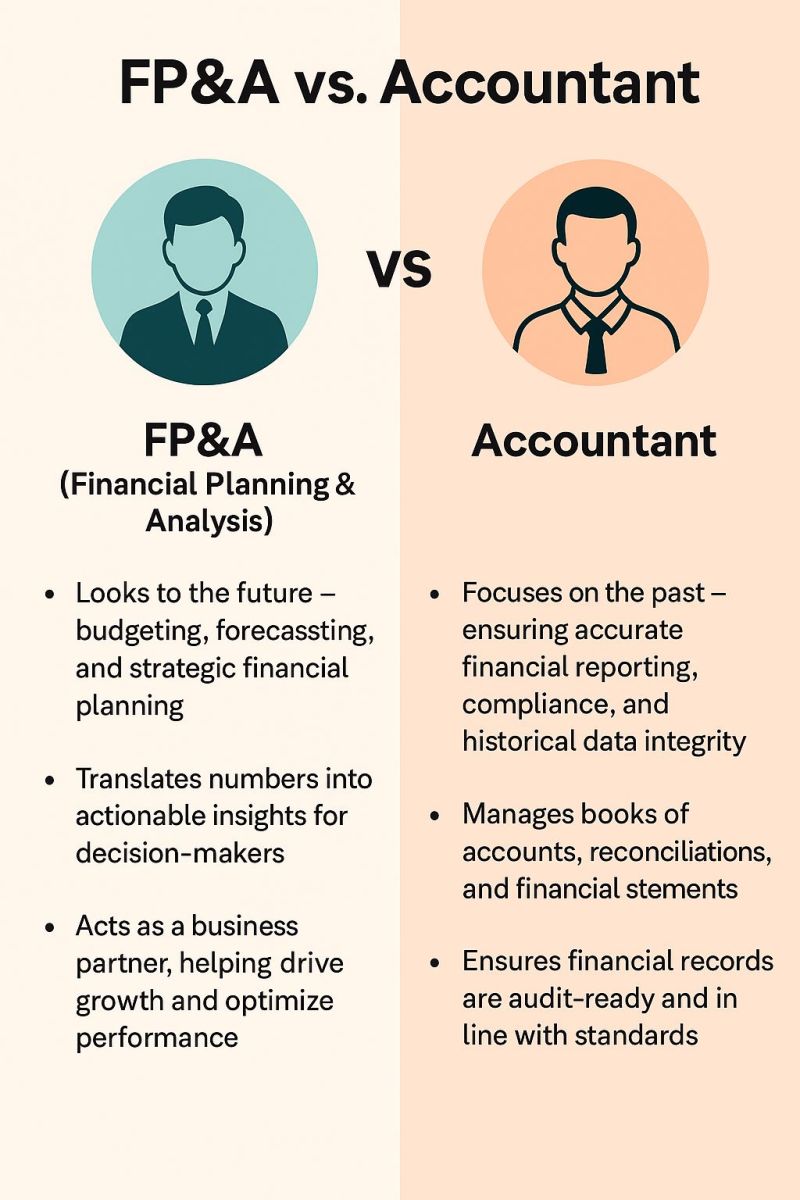
In today’s rapidly evolving business environment, especially across the UAE and KSA, finance teams are no longer measured by how well they “close the books.” They are measured by how effectively they guide strategy, improve profitability, drive growth, and reduce financial risk. This shift has redefined what businesses truly need: not just an accountant, but a strategic finance partner.
While traditional bookkeeping and compliance remain essential, they no longer provide the competitive edge required to navigate modern markets. This is where financial advisory, FP&A, and virtual CFO services reshape the landscape, transforming finance from a record-keeping activity into a value-creation engine.
1. Bookkeeping: The Foundation, Not the Finish Line
Bookkeeping is the most fundamental layer of finance. It ensures:
Accurate recording of daily transactions
Clean ledgers and reconciliations
Timely updates to financial records
Bookkeeping is essential for compliance, VAT filing, ZATCA reporting, payroll, and routine financial operations.
But bookkeeping alone cannot guide strategy. It is backward-looking, capturing what already happened. Businesses in the GCC now require real-time insights, not just data entry.
2. Accounting: Turning Records Into Financial Statements
Traditional accounting elevates bookkeeping into structured financial reporting. This includes:
Profit & Loss statements
Balance sheets
Cash flow statements
Working capital reports
Accounting provides insight into performance, yet it still remains historical. It helps business owners understand what happened last month or last quarter, but it does not forecast what will happen next.
In high-growth markets like UAE and KSA, static reporting is no longer enough. Businesses need deeper intelligence, predictive modeling, and advisory-led interpretation.
3. FP&A: Where Strategy Begins
Financial Planning & Analysis (FP&A) bridges the gap between reporting and decision-making. It provides:
Budgeting and forecasting
Scenario planning
Cost analysis and financial modeling
Trend evaluation and variance analysis
Performance dashboards
FP&A is forward-looking. It answers critical questions:
Where are we heading?
How do current trends impact future results?
What should we adjust to improve margins or cash flow?
For companies operating in competitive sectors; retail, e-commerce, logistics, construction, and professional services, FP&A is the strategic compass that guides operational and financial decisions.
4. Advisory: The Finance Partner Every Business Needs
This is where real value lies. Financial advisory transforms accounting into leadership, helping business owners make decisions that shape the entire organization.
Finance advisory includes:
✓ Strategic decision-making support
Market entry, pricing strategies, investment planning, expansion into UAE/KSA.
✓ Cash flow optimization & liquidity planning
Ensuring capital efficiency, reducing cash shortages, and strengthening financial resilience.
✓ Profitability improvement
Identifying inefficiencies, cost drivers, and optimization opportunities.
✓ Governance, risk management & financial controls
Building scalable internal control systems for growing remote and hybrid teams.
✓ CFO-level guidance without hiring a full-time CFO
A cost-effective way to access senior financial expertise.
Unlike compliance-driven services, advisory looks ahead, not backward. It positions finance as a growth partner, not an expense.
5. Why Businesses in UAE & KSA Are Shifting to the Advisory Model
The GCC region is experiencing transformation:
New regulations
Rapid digital adoption
Increased SME formation
Cross-border expansion
Evolving tax environments (VAT, e-invoicing, CIT roadmap)
This creates a need for a higher level of finance sophistication something traditional accounting cannot fulfill.
Companies now expect finance teams to provide:
Real-time financial visibility
Scenario modeling
Predictive insights
Strategic recommendations
Growth-aligned financial structures
The result? A clear shift toward outsourced advisory-led finance departments that combine bookkeeping + accounting + FP&A + advisory into one seamless function.
6. Why Your Business Needs a Finance Partner, Not Just an Accountant
A finance partner helps you:
Build a scalable financial structure
Improve cash flow and profitability
Strengthen financial governance
Make better operational and investment decisions
Support board, investor, or lender reporting
Manage risk during market volatility
With advisory in place, finance becomes:
✔ A strategic arm of your business
✔ A driver of growth
✔ A safeguard against inefficiencies and financial risk
This is the future of finance; collaborative, real-time, strategic, and insight-driven.
Final Thoughts
While bookkeeping and accounting create the foundation, advisory provides direction. Businesses in UAE and KSA that adopt an advisory-led finance function gain clarity, agility, and strategic confidence especially in markets undergoing constant regulatory and economic changes.
The message is simple:
Don’t just hire an accountant. Choose a finance partner who drives your business forward!